






Chemical Peel Before and After: What to Expect
Most of the messages we get about peels show up around day two or three, usually a photo of flaking skin along someone's jaw, with some version of "is this normal." It is. You'll be pink and a little tight the day of your peel, that settles within a day or so, and then somewhere between day two and day five the top layer sheds, which honestly looks rougher than the redness ever did. It's also the whole point. Underneath that flaking is the skin that ends up brighter and smoother once it's done.
If you're still not sure your skin can even handle a peel, we wrote about that separately in is a chemical peel right for your skin. If acne scars are the real reason you're looking into this, read whether chemical peels work on acne scars before you book anything. And the actual treatment, including the Environ line we use, is on our chemical peel service page.
Table of Contents
"Is This Normal" Is the Question We Get Most
What Actually Happens, Day by Day
Skin Terms Worth Actually Understanding
"Is This Normal" Is the Question We Get Most
By day three, a fair number of clients message us convinced something went wrong. Almost nothing ever has. Flaking is just the treated layer of skin coming off on schedule, and it can look alarming mostly because it's visible in a way plain redness isn't, especially the first time you go through it.
Knowing that ahead of time is basically the whole trick. Once you expect it, day three stops being a crisis and turns into a day you wear a little less makeup than usual and wait it out.
What Actually Happens, Day by Day
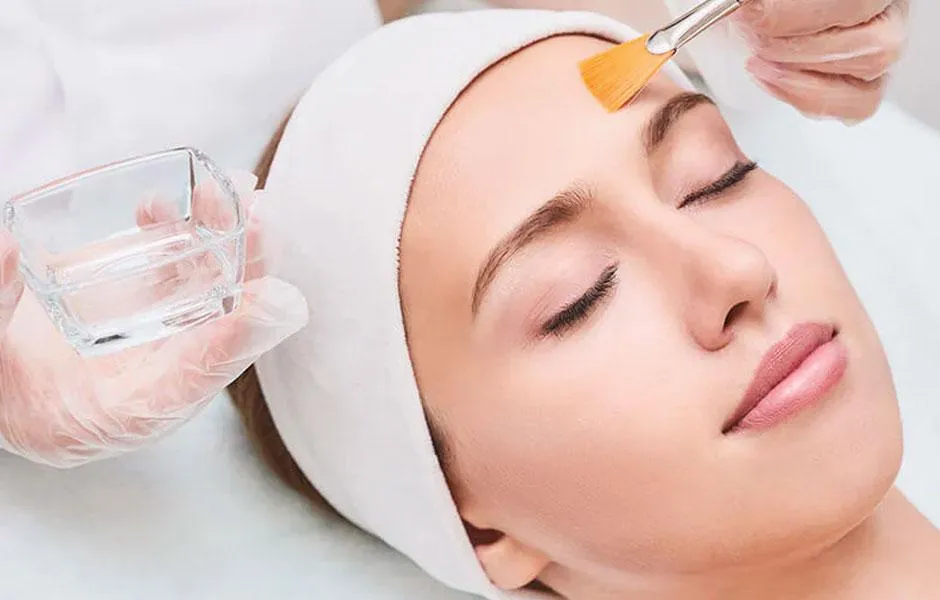
The solution goes on fast, and most people feel warmth or a light tingle depending on the formula. Your provider watches the whole time and takes it off on a schedule, not by guesswork.
For the rest of that day you're pink, maybe a bit swollen, and your skin feels roughly the way it does after too much sun. That eases by the next morning, though dryness and tightness tend to stick around a little longer than the color does.
Then comes the flaking, and this is genuinely the part people underestimate no matter how many times we mention it beforehand. The American Academy of Dermatology's own numbers for a lighter "refreshing" peel put total healing at one to seven days, with scaling that can run another three to seven days after the redness itself has faded. We lean toward that gentler range on purpose with Environ peels, since a medium-depth peel's timeline, which the AAD puts closer to seven to fourteen days with swelling that can worsen over the first 48 hours, isn't really what most people booking a routine visit are signing up for.
Once the shedding is done, skin looks brighter and feels smoother, and tone evens out some. If what actually brought you in was something bigger, deep acne scarring, or years of sun damage, one peel was never going to be the whole answer on its own, and that's worth hearing now instead of finding out three sessions in.
Why Environ, Specifically
A lot of what gets written about peels online treats the acid percentage on the label like it tells you the whole story. It mostly doesn't. Environ's formulas were built to get real exfoliation and collagen stimulation without demanding a recovery that takes over your week, which matters more than the number on the label, especially set against older peel formulas that gave the whole category its rough reputation to begin with.
Matching the right strength to a given person's skin is a judgment call your provider makes during your consultation, based on how your skin has responded to treatments before, how much downtime you're actually willing to deal with, and what you're hoping to fix in the first place. Too strong, and you're looking at a longer, rawer week than the result was worth. Too mild, and you paid for something you'll barely notice happened.
Skin Terms Worth Actually Understanding
Erythema is just the clinical name for the pink, post-peel look, and it's supposed to be there. Cell turnover speeding up temporarily is the mechanism behind most of what a peel does, your skin swapping old cells for new ones faster than it would on its own. The one worth actually paying attention to is post-inflammatory hyperpigmentation, or PIH, the darker patch that can develop after skin gets irritated, including by a peel stronger than it needed. It shows up more in medium to deep skin tones, and it's the best argument there is for not guessing at peel strength.
What Changes Your Timeline
A stronger peel means more dramatic flaking and a bigger result, and also more days of looking mid-recovery instead of finished. Skin that's already reactive stays pink longer no matter how gentle the formula is. Sun on unprotected, freshly peeled skin stretches out redness and raises your odds of pigment changes, which is the real reason sunscreen matters more this particular week than any other. And piling retinoids or strong acids on top of a fresh peel, even when it feels productive, usually just slows healing down instead of helping it along.
Timing a Peel Around Something Important
A client came in wanting to look rested for her fortieth birthday dinner, ten days out, and booked her Environ peel a full week ahead specifically so she'd be past the flaky stage by the night of. Someone who books two days before an event instead often ends up mid-flake at their own party, which isn't the outcome anyone's going for. If there's a date circled on your calendar, mention it when you book. It changes both the strength we'd pick and when we'd actually schedule you.
Getting Through the Week Well
Leave five to seven days before anything important, more if you're going stronger than your usual peel. Skip retinoids or aggressive acids beforehand if your provider tells you to. Once the flaking starts, leave it alone, picking at it only drags things out. Whatever aftercare you're sent home with, often something from our skincare line, is chosen specifically for this healing window, so use that instead of whatever's already in your cabinet. Wear sunscreen that's actually sunscreen, not a tinted moisturizer with SPF buried three ingredients down the label. Skip long, hot showers and saunas for the first day or two if you can. Heat feels soothing in the moment, but it opens pores and can aggravate skin that's already working through a compromised barrier. And if a follow-up peel gets recommended, that's usually four to six weeks out, since results build across a few visits more than they show up after just one.
Frequently Asked Questions
How long until I actually see results?
Once the flaking's done, which for a lighter peel is usually within a week. Bigger goals, like acne scarring or stubborn dark spots, need a series spaced weeks apart before you'll see much change.
Will people know I just got a peel?
Maybe for a day, especially with something stronger than usual. Most clients say the pink phase reads more like they came from a workout than a procedure. Booking a week out from anything important sidesteps the question entirely.
Does peeling always happen?
Not with every formula, and not every time. A gentler peel sometimes barely shows, just leaves skin softer than before. A stronger one sheds more visibly. Neither approach is a mistake, they're built for different goals.
Can I wear makeup while I'm flaking?
We usually ask clients to skip makeup for the first 24 hours. After that, mineral makeup tends to be fine while things finish settling.
My skin looks worse a few days in, not better. Should I worry?
A little dryness or flaking is expected. If it looks like a burn, swells more than a little, or just isn't calming down after several days, call your provider instead of waiting it out on your own.
Once you're through the healing week and actually seeing that brighter result, it's worth asking what else might still be sitting underneath it. A peel changes surface texture and tone. It doesn't do much for deeper lines, hollows, or scarring, and that's really more of a dermal filler conversation. Ask your provider at your next visit what they'd actually recommend for what's bothering you, and go from there. Our team's backgrounds are here if you want to see who you'd be working with.
This article is for general education and isn't a substitute for personalized medical advice. Talk with a Be Beautiful provider about your skin history before starting any peel.