







Your First Botox Appointment: What Happens and What to Do Afterward
Most people who put off a first Botox appointment aren't scared of the needle. They just don't know what happens in the room, or what they're supposed to do (and not do) once they get home. We've already covered what Botox actually does to your face, whether it's safe, and how long it lasts, so this one is about the day itself, using the Botox page at Be Beautiful and four outside sources.
Fair warning: those outside sources don't agree on everything, especially exercise and lying down. We'll show you exactly where they split, so you know what to ask your provider.
Table of Contents
Rubbing, Touching, and Washing Your Face
Lying Down and Exercise: Where the Advice Splits
The Short Version
The appointment itself moves along, since the practice says injections typically take 10 to 20 minutes depending on how many areas you're treating, and afterward you can head straight back to whatever is next on your day. If you remember nothing else, remember that you shouldn't rub or press on the treated areas, that your provider is the right person to ask how long to wait before a hard workout, and that it's smarter to wait until around two weeks out before deciding how it turned out.
Before You Book
Before anyone picks up a syringe, you'll sit down for a consultation, and it's a conversation worth taking seriously: the practice says it goes over your medical history to make sure treatment is safe for you, and its page says Botox isn't recommended if you're pregnant, breastfeeding, or have certain neurological conditions, so if any of those apply, lead with that.
Bring a list of everything you take, supplements included. Cleveland Clinic recommends skipping aspirin, ibuprofen, and naproxen sodium afterward, since they can raise blood pressure and may make bruising more likely, and another medical society's page says to call the office before taking any painkillers or medication around your treatment. Nothing we read covers your particular prescriptions, so that one is for your provider.
The setting matters about as much as the questions you ask. The AAD cautions against getting injections at a spa party, a salon, or someone's home, and against ordering product online, because unlicensed product has been linked to long-term muscle paralysis and permanent eye damage, so it makes sense to look for a medical practice, skim the reviews, and ask who will really be doing your injections.
What Happens in the Room
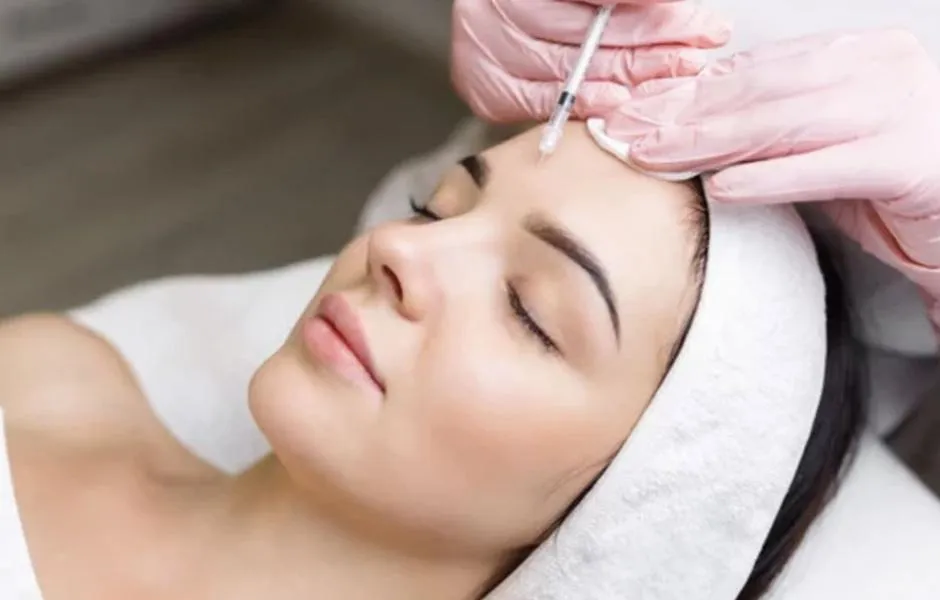
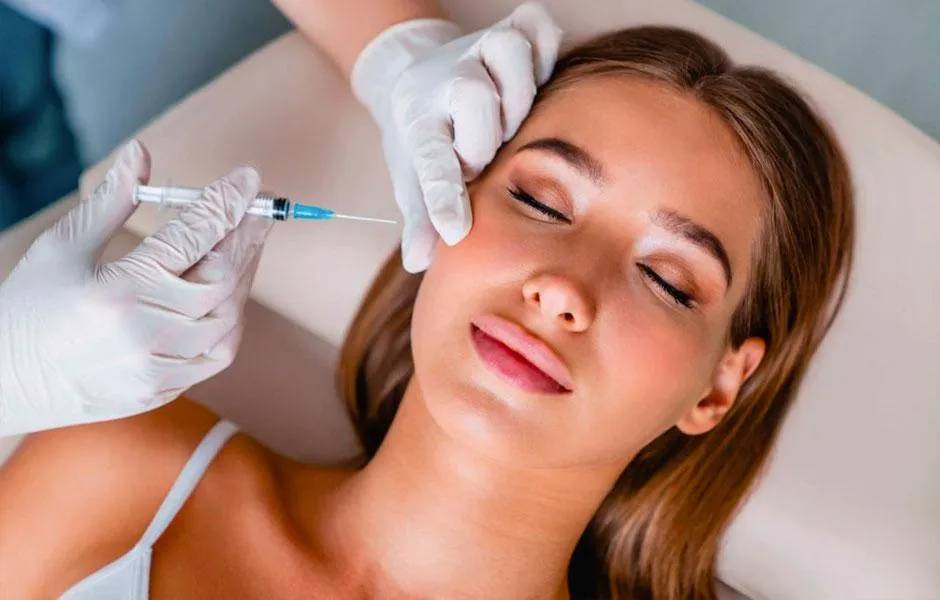
Botox is a purified botulinum toxin injected in very small amounts into specific muscles, and the practice says it briefly slows the ones that form lines over time, with treatment areas on its page that include forehead lines, crow's feet, under-eye lines, a lip flip, and teeth grinding, so what you end up getting depends on what bothers you most.
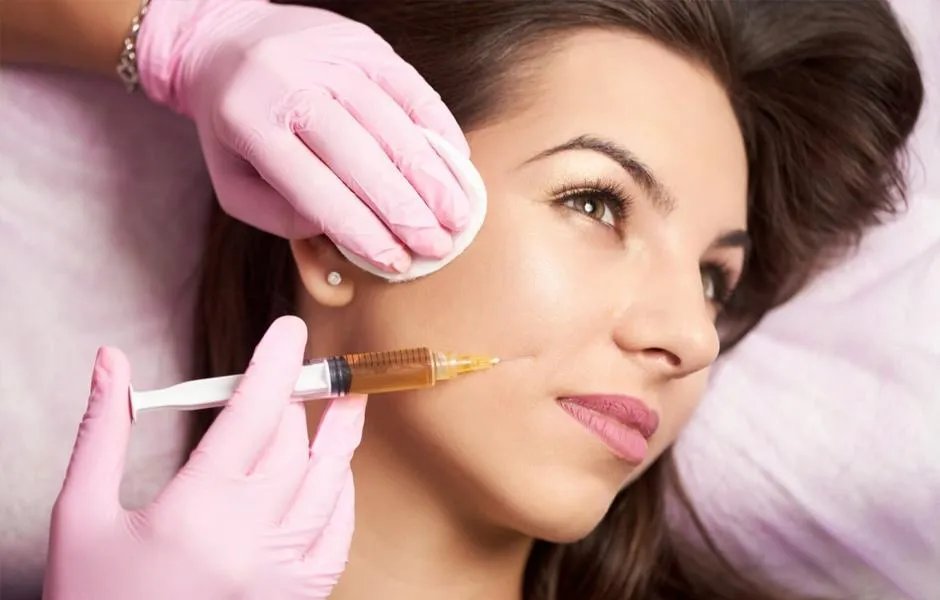
Most clients describe the feeling as a tiny pinch, and since a topical numbing cream is available and the ASPS says no anesthesia is required, whether you use the cream is up to you, though it's worth asking for if you're feeling nervous.
The look you're after matters too, because the practice says its injectors take a conservative, personalized approach and the AAD describes injecting just enough that your natural expressions are kept, so the two line up, and it's still worth saying out loud before the first injection since it changes how the treatment gets planned.
The First Few Hours
You'll probably see a few small bumps or pinpoint marks where the needle went in, and Cleveland Clinic says the injection sites close in about 15 minutes and treats that as the cue for makeup, while the AAD says you can put makeup on as soon as you leave the treatment room as long as you dab it on instead of pressing or rubbing, so either way the thing to avoid is pressure.
Mild redness or swelling is normal, and the practice says slight bruising or redness typically fades within the first day or so, although other sources allow longer, as we'll get to below, and there's no downtime in the stay-home sense because the ASPS says there's no recovery time and you can resume normal activities immediately, which the practice says as well.
Rubbing, Touching, and Washing Your Face
This is the one rule nobody argues with: don't rub or massage the treated areas. The ASPS explains why, which is that the toxin can migrate and cause temporary facial weakness or drooping.
For how long, the answer depends on where you look. Cleveland Clinic says 12 hours in one section and about 24 hours in another, and never explains the gap, while the AAD and the ASPS don't give a number at all. Our read is that longer is the safer direction, and your provider can tell you the practice's number.
Plain touching is fine, and so is washing your face if you're light about it. So you don't have to hover your hands around your face all day, but skip the firm cleansing massage and the face-first nap.
Lying Down and Exercise: Where the Advice Splits
This is where first-timers get tripped up. On lying down, Cleveland Clinic says to stay upright for 3 to 4 hours, and the Aesthetic Society says to avoid lying down or inverting your body after injections. The AAD and ASPS pages don't mention it at all.
On exercise, there are three different answers. The AAD says to wait two hours before anything strenuous. The Aesthetic Society says to skip vigorous activity for the rest of the day. And Cleveland Clinic says some providers say 24 hours, while its own expert sees little evidence that exercise changes how Botox settles, with a note that exercise can raise blood pressure and bruising, so people who bruise easily might sit it out for a few hours.
We can't settle that from here; no need to worry, Be Beautiful practitioners will go over any necessary aftercare with you. Ask, and follow what they tell you. If you want a plan for the afternoon in the meantime, the cautious one is no heavy workout and no nap until the next day.
Alcohol, Pain Relievers, and Facials
Alcohol first. Cleveland Clinic says to skip happy hour on the day of treatment, so think of it as one day off. Pain relievers are the same list as above, aspirin, ibuprofen, and naproxen sodium, with no time window given, which means a headache after your appointment is a reason to call the practice before you open the medicine cabinet.
Facials and massages can wait at least 24 hours, and longer if you have bruising or swelling. So don't book a spa day for the day after your Botox.
When Results Show Up
Botox is a slow burn, which surprises a lot of first-timers who expect a difference by dinner. The practice says smoother skin can start to show within 3 to 5 days, with the full effect closer to 10 to 14 days, and Cleveland Clinic's few days to a week for the first signs fits right in with that.
Our advice, for what it's worth, is to put the mirror away for a while, because a check on day two or three can mislead you when one side settles a little before the other, and two full weeks is a fairer point to talk with your provider about how it looks and whether a touch-up makes sense.
As for how long it lasts, the AAD says about 3 to 4 months for lines and wrinkles, sometimes longer, and the practice lands in the same place, though it points out that your metabolism, lifestyle, and treatment area all matter. The AAD also says you can return when the lines come back, and that repeat treatment may thin the muscle, which can lead to longer-lasting results.
Normal, and Not Normal
Side effects tend to be mild and short-lived, with the AAD listing swelling, redness, soreness, and bruising that lasts about a week, and the Aesthetic Society saying bruising usually clears within a week or two, while a mild headache is uncommon and, as Cleveland Clinic points out, hard to pin on Botox in the first place.
A drooping brow or eyelid is rarer. The AAD says it happens when neighboring muscles get weakened, and Cleveland Clinic says it's almost always about the injector's technique and not anything you did afterward. So if you're replaying your day trying to figure out what you did wrong, you can probably stop. It also wears off as the muscles return to normal.
Still deciding between Botox and something else? Our post on how to tell whether you need Botox or filler is a good next read.
Cost and Booking
We don't quote prices here, since product pricing is set by the practice and can change. For questions about a product, use the contact page or call (786) 497-3150, and you can look over the team on the providers page.
Booking goes through the practice's online scheduling page. The office is at 9075 SW 162nd Ave, Suite 102, Miami, FL 33196, open Wednesday through Friday from 10 AM to 5 PM and Saturday from 10 AM to 2 PM.
Words You'll Hear
Botulinum toxin is the active ingredient, purified and used in very small amounts, and Botox is the brand name most people use for the whole category. A lunchtime procedure is the practice's phrase for a treatment quick enough to fit into a break. Migration is the ASPS's word for toxin spreading somewhere it wasn't meant to go, which is the reason behind the no-rubbing rule. And a touch-up is a follow-up visit to adjust the result.
Frequently Asked Questions
How long will my first Botox appointment actually take?
Plan on about 10 to 20 minutes of actual injecting, depending on how many areas you're treating, which is what the practice says, with the consult and paperwork added on top of that.
Is it going to hurt?
A tiny pinch is how most clients describe it, according to the practice, and if you'd like some extra comfort, a topical numbing cream can be applied beforehand.
Is it okay to go back to work right after my appointment?
Yes, according to both the practice and the ASPS, you can resume normal activities right away, as long as you keep from rubbing your face and check with your provider about when a hard workout is okay.
How soon will I notice that Botox is working?
Somewhere between 3 and 5 days in, according to the practice, though the full effect takes closer to 10 to 14 days, which is why we'd wait for the two-week mark before making up your mind.
How often will I need Botox?
The AAD says results for lines and wrinkles last about 3 to 4 months, sometimes longer, so that's the window to plan around, and your provider can help you set a schedule that fits your own metabolism and treatment area.
This isn't medical advice, just a plain-language roundup of what these sources say, so check with a licensed provider who can see your face and your health history before you act on any of it.
Book a consultation with one of our providers for better care for your skin.
This article is for general education and isn't a substitute for personalized medical advice. Talk with a Be Beautiful provider about your skin and health history before starting any treatment.